
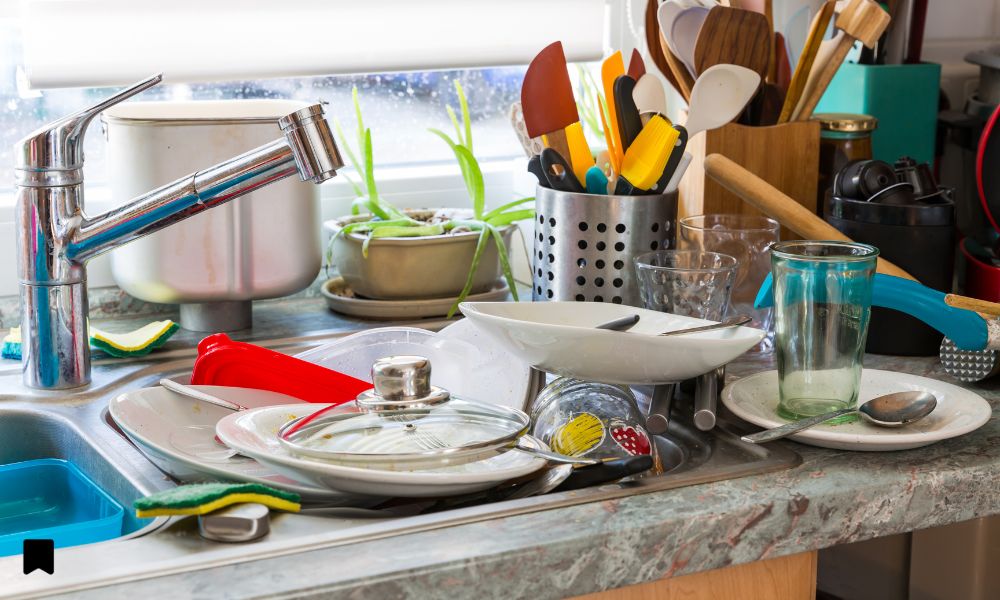

Most parents don’t need a spotless house. They need a house that doesn’t feel like it’s constantly one bad day away from chaos.
The problem isn’t that you don’t clean. It’s that life keeps happening faster than the house can recover. Dishes multiply, laundry spreads, the living room turns into a storage unit, and the mess starts feeling heavier than it should.
This is the reset that fixes that.
The 20-Minute Reset isn’t deep cleaning, and it’s not a weekend project. It’s a short, repeatable routine that gets your home back to “under control” fast, even when you’re tired, even when you’re busy, even when you don’t feel like doing anything.
Because when the house is reset, everything else gets easier, mornings run smoother, and weeknights feel lighter. And you stop living in that constant background stress of “we’re falling behind.”
The 20-Minute Reset (Daily)
What the 20-Minute Reset Is (And What It Isn’t)
The 20-Minute Reset is a daily routine designed to do one thing: restore order.
Not perfection. Not spotless. Just order.
It’s the difference between a house that feels stressful and a house that feels livable. It’s the difference between waking up already behind and waking up with a clean starting point.
Here’s what the reset is:
It’s a short burst of effort that focuses on the few areas that create the most visible mess and the most mental pressure. You’re clearing surfaces, removing clutter, and resetting the spaces your family actually uses — so tomorrow doesn’t start with yesterday’s problems.
And here’s what it isn’t:
This is not the time to scrub baseboards, reorganize closets, or start a “whole house cleaning plan.” If you treat this reset like deep cleaning, you’ll dread it. If you treat it like maintenance, you’ll actually do it.
The goal is simple: in 20 minutes, your house should feel calmer.
Not because everything is done, but because the mess is contained, the main spaces are reset, and the next day will be easier.
When to Do the Reset (The Best Time + The Real-Life Option)
The best time to do the 20-Minute Reset is when it prevents tomorrow from becoming harder.
For most families, that means one of two windows:
Option 1: After dinner
This is the sweet spot because the mess is fresh and the night hasn’t fully collapsed yet. You’re already moving around, the kitchen is active, and you can reset the main areas before everyone disappears into screens, showers, homework, or bedtime routines.
The reset doesn’t have to feel like a separate event. It can be the “closing routine” of the day.
Option 2: Right before bed
If evenings are chaotic, doing the reset right before bed is still a win. You don’t need energy. You just need a timer and a short list.
This version is less about cleaning and more about setting up tomorrow. You’re clearing the obvious mess, resetting the main surfaces, and making the morning feel lighter.
The rule: pick a time you can repeat
The perfect time doesn’t matter as much as consistency.
The reset works because it becomes a habit. If you do it four nights a week, your house will feel dramatically different than if you only “catch up” on weekends.
And if you miss a day, nothing breaks. You just do it the next day.
The 20-Minute Reset (5-Minute Blocks)
This reset works because it has a start and a finish. You are not wandering around the house trying to decide what to do. You are running a simple sequence.
Set a timer. Move fast. Do not aim for perfect.
Minutes 0–5: Clear the obvious mess
Start with the things that make the house feel instantly messy.
Pick up and throw away:
- trash
- packaging
- random papers
- anything that is clearly not staying
Then do one quick sweep for items that are out of place. Do not put them away yet. Just gather them.
Minutes 5–10: Reset the kitchen
The kitchen is the emotional center of most homes. If the kitchen looks bad, everything feels worse.
In this block, focus on the basics:
- load the dishwasher
- stack dishes neatly if you cannot wash them yet
- clear the counters
- wipe one main surface if you have time
You are not deep cleaning. You are closing the kitchen.
Minutes 10–15: Reset the main living area
This is the room your family sees the most. It does not need to be perfect. It needs to feel usable.
Focus on:
- clearing the coffee table
- folding blankets
- straightening pillows
- putting toys into one bin
- returning shoes and bags to one spot
If you only do one thing here, do this. Clear the main surface. A clean surface changes the whole room.
Minutes 15–20: One “future you” win
This last block is small, but it is powerful. It is the part that makes tomorrow easier.
Pick one:
- start a laundry load
- fold one basket
- set out backpacks and shoes
- refill water bottles
- wipe the bathroom counter
- take out the trash
Do not try to do all of them. One is enough.
The Parent-Proof Rules (When You’re Tired, Busy, or Behind)
The reason most cleaning routines fail is not because parents are lazy. It’s because most routines are designed for an imaginary version of life where you have extra energy at the end of the day.
Real life is different. By the time dinner is done, homework is handled, and bedtime is in motion, you are not looking for a “system.” You are looking for the fastest way to make the house feel okay again.
That’s why the 20-Minute Reset has to be parent-proof. It has to work on normal nights, but it also has to work when you are tired, distracted, and running on fumes.
The first rule is to stop aiming for perfect. A reset is not deep cleaning. It is not organizing. It is simply restoring order. You are getting the house back to a place where it feels calm enough to live in, and where tomorrow does not start with yesterday’s mess.
Another rule that makes this easier is to stop doing ten little trips across the house. That is the fastest way to burn out and quit halfway through. Instead, use one bin, one basket, or one laundry hamper and let it hold the clutter for the night. The goal is not to put every item away. The goal is to clear the main spaces so the house feels lighter immediately. You can always sort the bin later when you have more time.
If the reset ever feels too hard, protect the kitchen first. The kitchen has a weird power in a family home. When it is messy, everything feels messy. When it is reset, everything feels more under control. Even if you do nothing else, a cleared counter and a handled sink changes the entire mood of the house.
The last rule is the one that keeps the reset alive long-term. Keep it small enough to repeat. If you turn the reset into a bigger and bigger project, you will eventually stop doing it. The reset works because it stays simple and it stays short. It is not a one-time fix. It is maintenance that keeps the mess from building into something overwhelming.
And if you miss a day, it does not matter. You did not fail. You just had a day. Restart tomorrow and keep moving. That is how this becomes a habit instead of a guilt cycle.
The 10-Minute Reset -The Survival Version
Some nights, 20 minutes is not happening.
The kids are melting down, you are wiped out, and the house feels like it is getting louder just by looking at it. On those nights, the goal is not to “catch up.” The goal is to keep tomorrow from being harder.
That is where the 10-Minute Reset comes in.
It is the same idea as the full reset, but stripped down to the essentials. You are doing the smallest amount of work that still makes the house feel under control.
Start a timer for ten minutes and focus on only three things.
First, handle the kitchen enough that you are not waking up to chaos. Load the dishwasher if you can. If you cannot, stack dishes neatly and clear the counters. You are not trying to clean the kitchen perfectly. You are trying to make it usable.
Next, do a fast sweep of the main living area. Put obvious trash in the bin. Toss toys into one basket. Clear the main surface. Even one clean table changes the way the room feels.
Last, set up one small win for tomorrow. That might be backpacks by the door, shoes in one spot, water bottles filled, or a laundry load started. It does not matter which one you pick. It only matters that tomorrow starts easier than it would have.
The 10-Minute Reset is not a backup plan. It is a real strategy. It keeps your home from slipping into the kind of mess that takes hours to fix later.
Closing – Why This Works + The Calm-House Payoff
The 20-Minute Reset works for one reason. It stops the mess from becoming a project.
Most homes do not fall apart because nobody cleans. They fall apart because small messes build up for days, then suddenly it feels like you need an entire weekend just to get back to normal. That is when people get overwhelmed, avoid it, and the cycle keeps going.
This reset breaks that cycle.
It gives you a clear finish line and a simple order of operations. You clear what is obvious, reset the spaces that matter most, and set up tomorrow so the house feels lighter the moment you wake up. You are not trying to do everything. You are just keeping the home in a steady, livable state.
And that matters more than people realize.
A reset house makes mornings calmer. It makes weeknights feel easier. It reduces the constant background stress that comes from feeling like you are always behind. It also gives you momentum, because once the house is reset, everything else feels more manageable.
The goal is not to have a perfect home.
The goal is to have a home that supports your life instead of draining you.
SaveTheParent Take
If you want your house to feel better fast, do not wait for motivation.
Set a timer and reset what you can.
Twenty minutes is enough to change the mood of your whole week.
Remember that you are only human and you’re allowed to have those lazy days, just remember that as a parent, the work will never stop.